
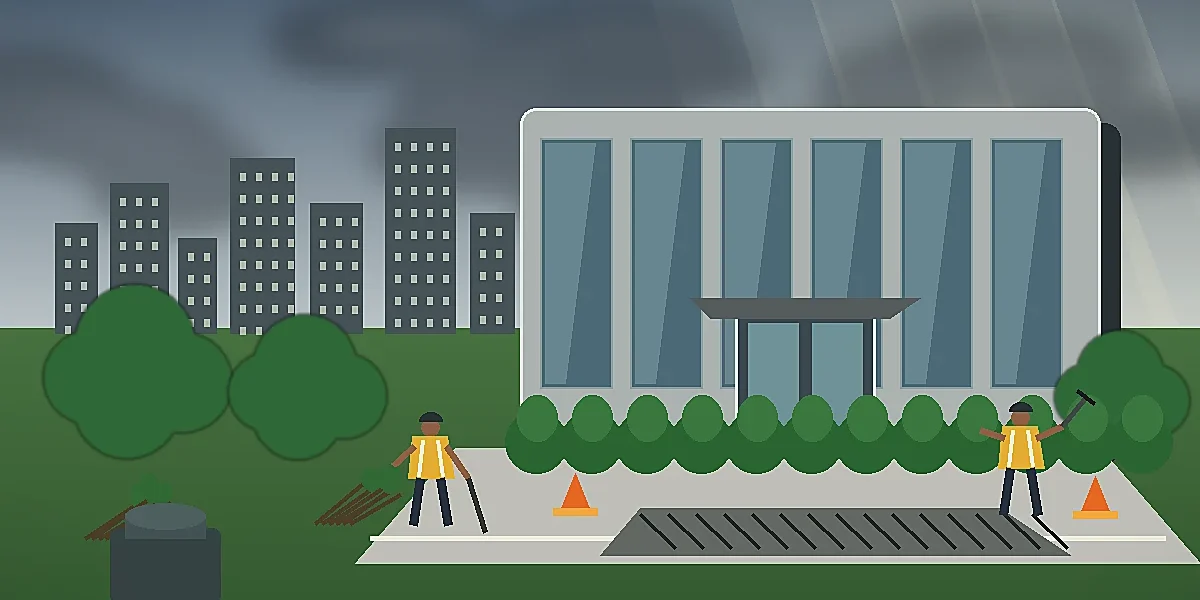
A Houston commercial property can look perfectly maintained on a calm Friday and face an entirely different set of risks by Monday morning. Tropical weather brings more than wind. Heavy rain can expose clogged drains, weak tree limbs, poorly aimed sprinklers, loose mulch, unstable planters, and access routes that were never designed with storm cleanup in mind.
For property managers, facility teams, HOA boards, and business owners, commercial landscaping hurricane preparation is part of protecting the property—not simply preserving curb appeal. The goal is to reduce hazards before a storm, make recovery faster afterward, and keep tenants, customers, residents, and crews away from avoidable risks.
This checklist explains how to prepare trees, turf, drainage, irrigation, beds, and common areas before hurricane season in Houston. It also shows where professional commercial landscaping in Houston can turn a last-minute scramble into a repeatable property-management plan.
Why Landscaping Belongs in Your Hurricane Plan
Emergency plans often focus on roofs, windows, generators, and communication. Those items are essential, but the landscape is the first part of the property exposed to wind and rainfall. Trees can drop limbs into parking areas. Shrubs can hide damage or block sight lines. Landscape debris can move into drains. Broken irrigation lines can continue releasing water after the storm has passed.
The Atlantic hurricane season officially runs from June 1 through November 30. Houston properties benefit from beginning landscape preparation well before a named storm enters the Gulf. Early work gives crews time to correct structural issues, remove accumulated debris, and schedule services without competing with a region-wide rush for contractors.
A storm-ready landscape is not stripped bare. It is healthy, inspected, documented, and arranged so water and wind have fewer opportunities to create damage.
The 8-Point Commercial Landscape Hurricane Checklist
1. Inspect Trees Before the Forecast Becomes Urgent
Start with trees near sidewalks, entrances, parking spaces, signs, lighting, roofs, playgrounds, and utility areas. Look for dead branches, split unions, hanging limbs, excessive lean, damaged trunks, and canopies that interfere with buildings or visibility.
Professional commercial tree trimming in Houston can remove deadwood, raise canopies, improve clearance, and reduce obvious wind hazards. The best time to address these issues is before storm alerts begin. Rushed cutting immediately before landfall may leave fresh debris on-site and can encourage unsafe work under worsening conditions.
- Prioritize high-traffic zones. Limbs above parking lots and walkways create a different exposure than branches over an unused corner of the property.
- Protect signs and lighting. Overgrown canopies can obstruct monument signs and security lights, making storm conditions harder to navigate.
- Avoid indiscriminate topping. Removing large sections of canopy without regard to tree structure can create long-term weakness and poor regrowth.
2. Clear Drainage Paths and Low Areas
Houston storms can deliver intense rainfall in a short period. Water needs a clear route away from buildings, walkways, beds, and parking areas. Before hurricane season, inspect surface drains, curb inlets, swales, catch basins, downspout outlets, and low turf areas.
- Remove leaves, mulch, soil, and litter from drain openings and channels.
- Check for ponding after routine irrigation or a normal rain; recurring puddles often reveal grading or drainage problems before a major storm.
- Keep landscape materials below drain openings so mulch and decorative rock are less likely to wash into the system.
- Document chronic wet areas and address them as property improvements rather than accepting them as seasonal nuisances.
Drainage preparation is especially important around apartment courtyards, retail sidewalks, medical entrances, loading areas, and community amenities where standing water can interrupt access after a storm.
3. Audit Irrigation Zones, Controllers, and Shutoffs
A sprinkler system should not add water while the property is receiving heavy rain. Test controllers, rain sensors, valves, exposed heads, and shutoff locations before hurricane season. Make sure more than one responsible person knows how to suspend the system.
Professional commercial sprinkler repair and irrigation maintenance can identify leaking valves, broken heads, poor coverage, and controller problems before they contribute to saturated soil or unexpectedly high water bills.
- Label the main shutoff and controller. A simple property map can save time when crews are responding after a storm.
- Pause automatic schedules before heavy rainfall. Restart only after the landscape is inspected and the soil can accept water.
- Inspect exposed components after cleanup. Vehicles, branches, and debris can damage heads and valve boxes even when the rest of the system appears normal.
4. Secure Loose Landscape Materials and Site Furnishings
Wind can turn lightweight objects into moving hazards. Walk the property with a simple question: what could shift, roll, lift, tip, or clog a drain? The answer may include empty planters, hanging baskets, portable signs, edging, landscape fabric, trash, hoses, decorative pieces, bags of soil, temporary irrigation lines, and recently cut branches.
- Move portable items indoors or place them in a secure storage area.
- Remove landscape debris from the property rather than stacking it beside fences, dumpsters, or drainage paths.
- Check mulch depth and bed edges. Excess loose mulch near pavement may wash into drains or spread across entrances.
- Coordinate with other vendors. Construction materials, pressure-washing hoses, and temporary signage can undermine an otherwise prepared landscape.
5. Protect Entrances, Sight Lines, and Emergency Access
Landscaping should not obstruct the routes people and emergency crews may need after a storm. Trim shrubs away from doors, fire connections, electrical equipment, hydrants, security cameras, and walkway lighting. Confirm that tree canopies do not block directional signs or traffic visibility at driveways.
For office properties, a dedicated office building landscaping program can keep entrances, parking areas, and tenant-facing spaces consistently monitored. Multifamily properties should pay special attention to leasing offices, pool areas, mail centers, pedestrian paths, and emergency vehicle access.
6. Adjust Mowing and Maintenance Around the Storm
Routine service still matters, but timing does. Grass that is excessively tall can trap debris and make damage harder to see. Scalping turf before a storm is also counterproductive because it stresses the lawn and exposes soil. Maintain the proper mowing height, finish edging and cleanup, and avoid leaving clippings in drainage paths.
A scheduled commercial lawn maintenance program gives the property a predictable rhythm before and after storms. It also creates repeated opportunities for crews to notice broken heads, leaning trees, erosion, and other changes that may not be visible from a vehicle inspection.
7. Photograph Conditions and Confirm Vendor Contacts
Before the storm, take dated photographs of trees, beds, turf, irrigation equipment, signs, fences, drainage areas, and high-value landscape features. Keep a simple site map that identifies shutoffs, controllers, drains, utility zones, and areas with recurring problems.
Documentation helps property managers compare pre- and post-storm conditions, communicate with ownership, prioritize cleanup, and support insurance conversations when appropriate. Confirm who has authority to approve emergency work and how after-hours decisions will be handled.
8. Build a Post-Storm Inspection and Recovery Sequence
Do not send untrained personnel into landscaped areas while winds remain strong, floodwater is present, or utility hazards are unresolved. Once the property is safe to enter, inspect in a deliberate order.
- Access and immediate hazards: blocked entrances, hanging branches, downed lines, unstable trees, and flooded routes.
- Drainage and standing water: clogged inlets, erosion, washouts, and water near buildings.
- Irrigation and utilities: broken heads, exposed lines, damaged valve boxes, and controller faults.
- Landscape condition: uprooted plants, damaged turf, scattered mulch, broken edging, and contaminated beds.
- Appearance and reopening: debris removal, mowing, pruning, bed restoration, and a final quality walk.
Prioritize safety and access before cosmetic restoration. A neat flower bed can wait; a blocked fire lane cannot.
A Practical Hurricane-Season Timeline
| Timing | Landscape Priority | Recommended Actions |
| Before June 1 | Inspection and correction | Inspect trees, drainage, irrigation, beds, signage, and access routes. Complete planned trimming and repairs before regional demand rises. |
| Monthly during hurricane season | Monitoring | Clear drains, review tree conditions, test irrigation controls, confirm vendor contacts, and update site photographs. |
| When tropical weather may affect Houston | Securing the site | Pause irrigation, remove loose materials, clear debris, protect access routes, and communicate the service plan to tenants and staff. |
| After conditions are declared safe | Recovery | Inspect hazards first, document damage, clear access, evaluate drainage and irrigation, then restore appearance and routine service. |
Common Storm-Preparation Mistakes
- Waiting until a hurricane watch is issued. Contractors, equipment, disposal capacity, and schedules tighten quickly once the forecast changes.
- Removing too much healthy canopy. Storm preparation should reduce hazards without damaging the long-term structure of valuable trees.
- Overwatering before heavy rain. Saturated soil can increase stress on turf and trees and worsen existing drainage problems.
- Leaving cut branches or bagged debris on-site. Material that is neatly stacked in calm weather may not remain in place during strong wind.
- Focusing only on appearance. The most important priorities are safe access, drainage, visibility, and hazard reduction.
- Assuming every vendor has the same responsibility. Property managers should define who handles trees, irrigation, debris, drainage observations, and emergency approvals.
How Preparation Changes by Property Type
Office Buildings and Retail Centers
Keep monument signs, storefronts, driveways, parking areas, and pedestrian entrances visible. Pay close attention to landscape islands where drains and sprinkler heads are easily damaged by vehicles or concealed by dense planting.
Apartment Communities and HOAs
Multifamily and community properties have more shared spaces and more people moving through them. A specialized apartment complex landscaping plan should account for leasing areas, pools, dog parks, mail centers, and resident walkways. HOA landscaping services should also protect entrances, medians, parks, and common-area signage that residents rely on immediately after a storm.
Healthcare, Education, and Industrial Properties
These properties often require uninterrupted access, clearer emergency routes, and tighter coordination with facility operations. Landscaping near generators, loading zones, utility equipment, and emergency entrances should remain controlled and easy to inspect.
Why One Commercial Landscaping Partner Helps
Storm readiness is harder when mowing, trees, shrubs, irrigation, and cleanup are divided among vendors who do not share information. A full-service landscaping partner sees the same property repeatedly and can connect problems that appear unrelated: a soggy bed may point to an irrigation leak; recurring mulch washout may reveal drainage flow; a low branch may affect both signage and emergency access.
High Maintenance Commercial Landscaping has served commercial properties across Houston, Humble, and Kingwood since 2015. Its service mix includes lawn maintenance, tree and shrub trimming, irrigation repair, seasonal cleanup, and property-specific programs for offices, apartments, HOAs, retail centers, banks, and other commercial sites.
The practical advantage is accountability: one team can inspect the grounds, document concerns, schedule corrective work, and return after the storm to restore the property.
Build a Storm-Ready Landscape Before the Forecast Changes
Hurricane preparation is most effective when it becomes part of normal property maintenance. Healthy trees, open drains, working irrigation controls, secure materials, and documented site conditions reduce uncertainty when severe weather approaches.
Schedule a property assessment with High Maintenance Commercial Landscaping before the next storm creates an emergency schedule. Request a commercial landscaping quote or call (832) 995-3922 to discuss a customized maintenance and storm-preparation plan for your Houston-area property.
Frequently Asked Questions
When should a Houston commercial property begin hurricane landscaping preparation?
The best time is before hurricane season begins on June 1, with ongoing monthly checks through November 30. Tree hazards, drainage problems, irrigation repairs, and large cleanup projects should be addressed early. When a storm is already approaching, the focus should shift to securing loose materials, clearing drains, pausing irrigation, protecting access, and confirming the post-storm response plan.
Should commercial trees be trimmed immediately before a hurricane?
Hazardous branches should not be ignored, but routine structural trimming is better planned in advance. Last-minute cutting can create debris, scheduling pressure, and unsafe working conditions. A professional should inspect trees and prioritize dead, damaged, hanging, or clearance-related limbs while avoiding aggressive topping or unnecessary removal of healthy canopy.
What should property managers inspect first after a major storm?
Begin with safe access and immediate hazards: downed power lines, hanging limbs, unstable trees, blocked entrances, floodwater, and damaged utility areas. Once those concerns are controlled, inspect drains, erosion, irrigation equipment, turf, beds, shrubs, signs, and landscape debris. Photograph conditions before cleanup when it is safe to do so, then prioritize reopening routes before cosmetic restoration.
Property-management note: This article provides general landscaping and preparedness information. Follow official emergency instructions, observe local restrictions, and use qualified professionals for hazardous tree, utility, drainage, or storm-recovery work.