
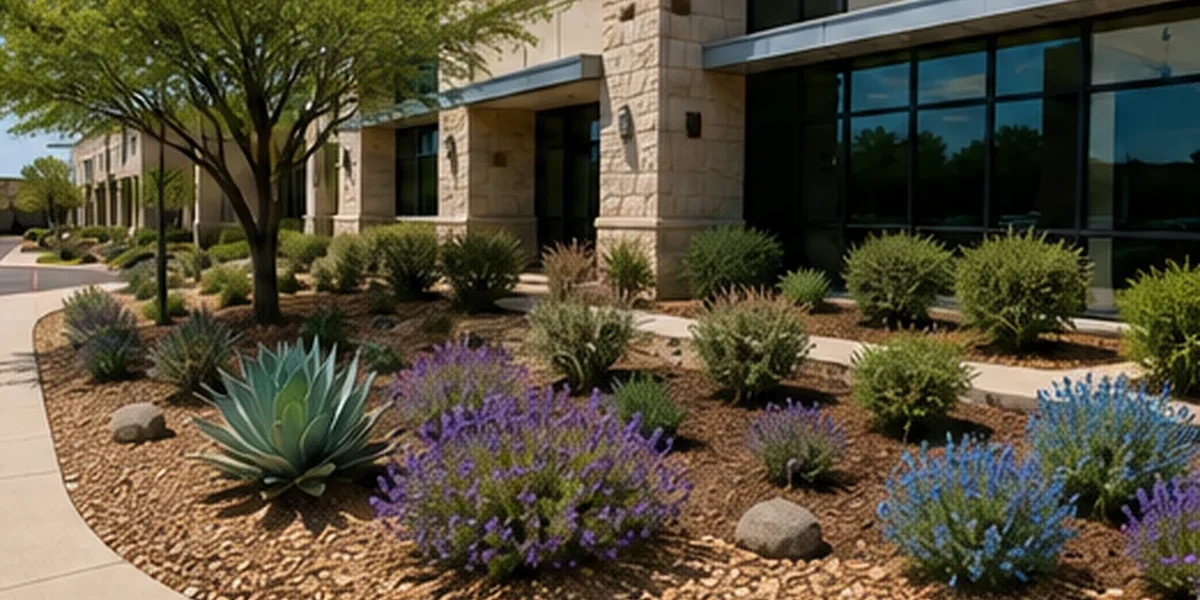
Houston landscaping has to handle two opposite realities: periods of heavy rain and periods when heat dries the soil quickly. That combination makes “water less” a poor landscaping strategy by itself. A commercial property still needs healthy turf, visible entrances, attractive planting beds, and reliable irrigation. The smarter goal is to build a landscape that needs less supplemental water to stay presentable.
Drought-tolerant commercial landscaping does not mean replacing every green space with gravel or using only cactus. It means matching plants to the site, grouping them by water need, improving soil and mulch coverage, limiting thirsty turf to areas where it adds real value, and managing irrigation with more precision.
For property managers in Houston, Humble, and Kingwood, this approach can support curb appeal while making commercial landscaping in Houston easier to maintain through changing weather.
What Drought-Tolerant Landscaping Really Means
A drought-tolerant landscape is designed to remain functional and attractive with less frequent supplemental irrigation once plants are established. That definition matters because newly installed landscapes still need careful watering while roots develop. A plant that is drought tolerant later can still fail if it is neglected during establishment.
The design should also fit the property. A retail center needs clear storefront and sign visibility. An office campus may prioritize shaded walkways and polished entrances. An HOA needs repeatable standards across large common areas. The water strategy changes with those priorities rather than forcing every property into the same plant list.
1. Keep Turf Where It Earns Its Place
Commercial turf is valuable in the right areas. It creates clean sight lines, supports recreation and gathering spaces, provides a familiar foreground around entrances, and can soften large buildings. The problem is using irrigated turf in narrow medians, steep slopes, awkward corners, or low-traffic strips where mowing and watering are difficult.
A drought-tolerant plan often keeps healthy turf in high-visibility or functional spaces and converts inefficient fragments into beds with shrubs, ornamental grasses, groundcovers, or mulch. The result can look more intentional while reducing mowing and irrigation demand.
2. Choose Plants for Houston Conditions, Not Just the Nursery Tag
Plant selection should account for sun exposure, reflected heat, drainage, soil, mature size, wind, and the amount of maintenance a commercial property can realistically provide. Plants near parking lots may experience much hotter conditions than plants on a shaded courtyard wall. A species that survives Houston generally may still struggle in the wrong microclimate.
Native and well-adapted plants can be useful because they are selected for regional conditions, but “native” is not a substitute for site matching. The best commercial plant palette is one that looks good at maturity, fits the available space, and does not require constant pruning or emergency watering to remain acceptable.
3. Group Plants by Water Need
One of the most practical water-saving design decisions is hydrozoning: placing plants with similar irrigation needs together. A bed of drought-tolerant shrubs should not share a watering schedule with newly planted seasonal color that needs more frequent attention. When plants with different needs share one zone, the schedule is usually set for the thirstiest plants, and everything else receives more water than necessary.
Grouping plants by water requirement allows commercial irrigation maintenance to be scheduled more precisely and makes troubleshooting easier when one zone begins to decline.
4. Use Mulch as Part of the Water Strategy
Mulch helps planting beds by moderating soil temperature, slowing surface evaporation, and reducing weed competition. It also gives commercial beds a finished appearance that reads as intentional even when seasonal color is limited. The goal is a consistent layer, not a deep mound against tree trunks or building materials.
Mulch should be refreshed based on actual breakdown and appearance rather than buried under new material every visit. A maintenance plan should also keep it off sidewalks, drains, and plant crowns.
5. Improve Irrigation Before Cutting Water
A drought-tolerant design can still waste water when sprinkler heads are broken, controllers are poorly programmed, and zones are mismatched. Before reducing run time, inspect the system for overspray, pressure problems, blocked heads, leaks, runoff, and schedule errors. Otherwise, a property manager may simply shorten an already uneven application.
Weather-responsive controls, rain shutoffs, proper pressure, and more targeted irrigation can help the system respond to actual conditions instead of following the same schedule all year.
6. Give Trees a Long-Term Role
Healthy shade trees can improve the experience of parking lots, sidewalks, courtyards, and entrances, but they need room for roots and canopies to mature. A drought-conscious plan protects existing healthy trees where practical and chooses new trees with mature size in mind. Poor placement leads to repeated pruning, pavement conflicts, blocked signage, and irrigation problems later.
Tree health and water efficiency work together. Professional commercial tree trimming should preserve sound structure and clearance without creating unnecessary stress through aggressive cutting.
7. Design for Maintenance, Not Just Installation Day
The most sustainable landscape is one the property can actually maintain. Beds that are too narrow for mature shrubs, plants that require constant shearing, mixed irrigation needs, and designs with no equipment access all increase labor and make consistent care harder.
Before installation, ask how the landscape will be mowed, edged, weeded, irrigated, trimmed, fertilized, and refreshed two years from now. That question often improves both water efficiency and budget predictability.
Drought-Tolerant vs. Conventional High-Water Landscaping
| Design Decision | Drought-Tolerant Approach | High-Water Approach |
| Turf placement | Turf concentrated in functional and high-visibility areas | Turf used broadly, including difficult strips and medians |
| Plant selection | Plants matched to sun, soil, drainage, and mature size | Plants selected mainly for immediate appearance |
| Irrigation zoning | Plants grouped by similar water needs | Different water needs combined in the same zones |
| Bed surface | Mulch and groundcover used to protect soil | Bare soil or inconsistent bed coverage |
| Maintenance | Pruning, irrigation, and plant choices planned together | Landscape requires frequent correction after installation |
| Water strategy | Water applied according to site and plant demand | Fixed schedule used as the default solution |
Where This Approach Works Especially Well
Water-conscious landscaping can be adapted to nearly any commercial property, but the design priorities vary by industry.
Office properties: Use shade, clean entrances, durable beds, and limited turf to keep the arrival sequence professional. High-visibility areas can be coordinated with commercial landscaping for offices.
Retail centers: Keep signs, storefronts, and parking-lot sight lines open while using durable plantings in medians and perimeter beds. See retail landscaping in Houston.
HOA common areas: Standardize plant palettes and irrigation zones so entrances and shared spaces can be maintained consistently across large properties. Review HOA landscaping services.
Industrial and institutional sites: Emphasize durable perimeter planting, shade where people actually walk, and irrigation systems that are easy to inspect and service.
A Practical Retrofit Plan for an Existing Property
Map the problem areas. Identify recurring dry spots, soggy zones, high-water turf, failing plants, difficult mowing areas, and beds that constantly need replacement.
Audit the irrigation system. Repair leaks and coverage problems before deciding that the landscape itself is the only problem.
Prioritize the most visible conversions. Start with entrances, medians, corners, and inefficient strips where a redesign can improve both appearance and maintenance.
Select plants by mature size and water need. Avoid repeating the same overcrowding that made the original beds expensive to maintain.
Protect soil with mulch and appropriate bed design. Reduce exposed soil and weed pressure while keeping drainage paths clear.
Adjust the maintenance plan. Update mowing, pruning, irrigation, and seasonal-color schedules to match the new landscape.
How to Know the Retrofit Is Working
Success should be measured by more than survival. A commercial landscape should still look intentional during hot weather, recover predictably after rain, maintain clean sight lines, and require fewer emergency irrigation or plant-replacement decisions. Water bills, irrigation run times, recurring repair calls, plant replacement, and crew observations can all help property managers judge whether the design is becoming easier to manage.
Because High Maintenance also provides commercial lawn maintenance, irrigation repair, tree care, shrub trimming, and seasonal landscape services, the maintenance plan can be adjusted as the property changes rather than treating drought tolerance as a one-time installation project.
Build a Landscape That Looks Good Between Rainstorms
Houston commercial properties do not need to choose between curb appeal and water efficiency. The better goal is a landscape that uses turf intentionally, matches plants to the site, groups water needs, protects soil, and keeps irrigation responsive to real conditions. That combination can reduce unnecessary water use while preserving the professional image customers, tenants, residents, and employees expect.
High Maintenance Commercial Landscaping serves businesses and managed properties across Houston, Humble, and Kingwood. To discuss a water-conscious redesign or maintenance plan, request a commercial landscaping quote.
Frequently Asked Questions
Does drought-tolerant landscaping mean removing all grass?
No. Turf can remain a useful part of a commercial landscape when it serves a functional or high-visibility purpose. The goal is to avoid using irrigated turf in areas where it is difficult to mow, rarely used, or expensive to keep healthy. Many properties benefit from a mix of turf, shrubs, trees, ornamental grasses, groundcovers, and mulched beds.
Do drought-tolerant plants need irrigation in Houston?
Usually, yes – especially while new plants are establishing roots. Mature drought-tolerant plants may need less frequent supplemental irrigation than higher-water plantings, but requirements still depend on species, soil, sun, rainfall, and site conditions. The irrigation system should be adjusted to the actual plant palette rather than turned off automatically.
Can an existing commercial landscape be converted gradually?
Yes. A phased retrofit can start with recurring problem areas such as narrow turf strips, high-water beds, failed medians, or zones with repeated irrigation issues. Converting the highest-maintenance areas first can improve appearance and operating efficiency without requiring the entire property to be redesigned at once.
Property-management note: This article provides general landscaping information. Plant selection, irrigation design, and water-use requirements should be evaluated for the specific property and current local conditions.