
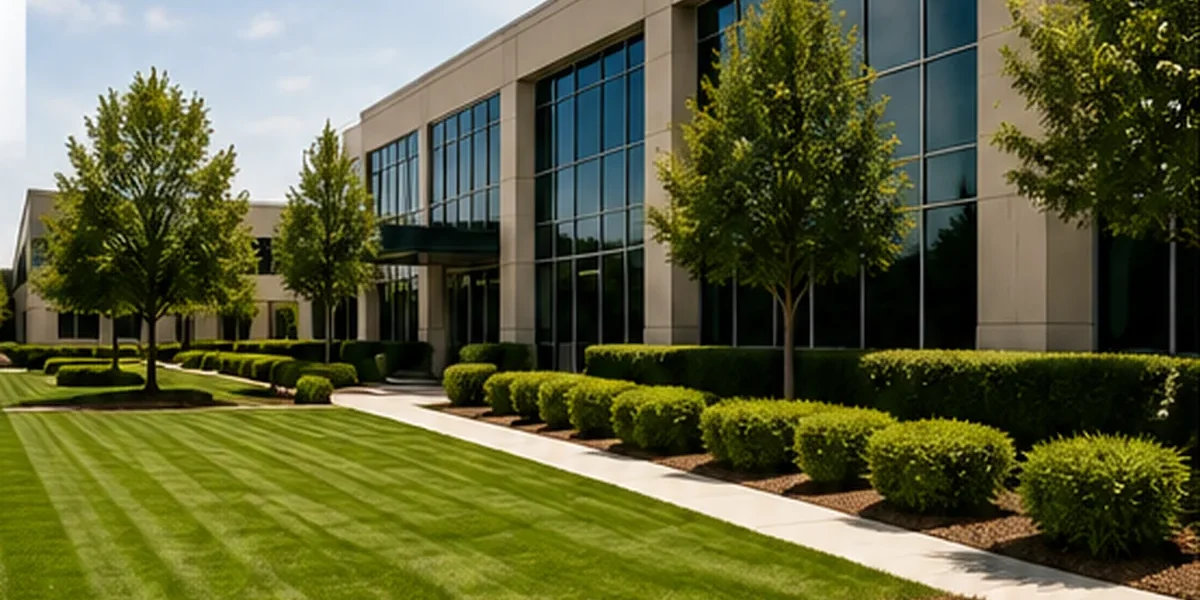
An office building starts communicating before anyone reaches the lobby. Visitors notice whether the entrance feels orderly, whether walkways are clear, and whether the grounds look consistently cared for. A clean lawn may seem like a small detail, but it helps shape the first impression clients, tenants, prospective employees, and vendors carry inside.
For Houston properties, routine Lawn Mowing is especially important. Warm-season turf, long periods of active growth, sudden rain, irrigation, and high-visibility frontage can make an office lawn look uneven in a matter of days. A dependable schedule keeps the property ready for business instead of forcing managers to react after the grass is already overgrown.
This guide explains the practical benefits of routine lawn maintenance for office buildings, what a professional mowing visit should include, and how property managers can build a schedule that protects appearance, turf health, and operating budgets.
Why Routine Lawn Maintenance Matters for Office Buildings
Office landscapes serve several audiences at once. They frame the arrival experience for clients, support comfortable outdoor areas for employees, help tenants feel confident in property management, and influence how well the entire site appears to be maintained. Because those audiences arrive every day, landscaping cannot be treated as an occasional cleanup project.
A routine plan brings mowing, edging, trimming, cleanup, irrigation observation, and seasonal adjustments into one predictable cycle. For office campuses and professional buildings, that consistency is the real value: the property looks intentional every week, not only immediately after a service visit.
1. Lawn Mowing Protects Curb Appeal and First Impressions
The lawn is often one of the largest visible surfaces around an office property. When it is evenly cut, sharply edged, and free of clippings, the building feels organized and professionally managed. When it is shaggy, scalped, or patchy, visitors may assume the same lack of attention extends to the business inside.
Routine Lawn Mowing helps prevent the cycle of looking polished for a few days and neglected for the rest of the month. It also supports consistent presentation across entrances, monument signs, parking-lot islands, courtyards, and street-facing areas.
2. A Predictable Schedule Supports Healthier Turf
Healthy mowing is not simply cutting grass as low as possible. Turf performs better when it is maintained at an appropriate height and when crews avoid removing too much leaf tissue in one visit. Turfgrass specialists commonly use the one-third rule: a mowing should generally remove no more than about one-third of the grass blade at a time.
Regular visits make that possible. When service is delayed until the grass is visibly tall, crews may have to cut aggressively, leave heavier clippings, or make repeated passes. The result can be stress, uneven color, exposed soil, and more opportunities for weeds to gain ground.
3. Routine Care Helps Control Weeds and Bare Areas
Mowing does not replace fertilization or targeted weed management, but it plays an important supporting role. A dense, properly maintained turf canopy shades the soil and competes more effectively with unwanted plants. Consistent visits also give crews a chance to notice thinning, disease symptoms, irrigation problems, and traffic damage before a small patch becomes a large repair area.
For office properties, early detection matters. Bare spots near entrances, sidewalks, loading areas, or employee gathering spaces tend to receive more wear and can quickly become muddy or unattractive after rain.
4. Clean Edges and Managed Growth Improve Safety
Overgrown turf can blur sidewalk edges, cover low obstacles, reduce visibility near curbs, and leave wet clippings on paved surfaces. A complete mowing visit should keep grass away from walkways, drain openings, utility covers, signage bases, and parking-lot boundaries.
Routine trimming also makes it easier to spot uneven pavement, irrigation leaks, washouts, or other conditions that deserve attention. Lawn care cannot eliminate every property risk, but a consistently maintained exterior makes hazards easier to see and address.
5. Professional Lawn Care Reduces Reactive Work
Reactive mowing is deceptively expensive. When a property waits until growth becomes obvious, managers may need emergency visits, extra labor, double cutting, heavy cleanup, or corrective work for scalped and stressed turf. A routine plan spreads work across the season and reduces the number of surprises competing for the facility team’s time.
It also simplifies communication. Property managers know when crews are expected, what areas are included, how rain delays are handled, and who is responsible for follow-up. That predictability is valuable for office properties with tenant meetings, executive visits, leasing tours, or outdoor events.
6. Consistent Grounds Support Tenant and Employee Experience
Employees and tenants may not discuss the lawn every day, but they experience it every time they arrive, take a break outside, walk between buildings, or meet a visitor. Neat green spaces make entrances feel welcoming and shared outdoor areas more usable. They also demonstrate that property management pays attention to the environment people use every day.
For multi-tenant offices, that consistency can reinforce confidence in common-area management. For owner-occupied buildings, it supports a brand image built around reliability and professionalism.
7. Mowing Creates Useful Feedback About Irrigation
A mowing crew sees the property frequently enough to notice patterns that may not be obvious from inside the building: one zone growing faster than another, turf staying wet near a broken head, brown arcs caused by poor coverage, or wheel ruts developing in saturated soil.
Pairing routine mowing with sprinkler repair and irrigation maintenance helps keep growth more uniform and prevents water problems from being mistaken for mowing problems. It also helps avoid the waste of irrigating areas that are already saturated or failing to water high-stress zones.
8. A Maintained Lawn Protects the Broader Landscape Investment
The lawn connects planting beds, trees, signs, walkways, and building entrances. When turf is neglected, even attractive shrubs and seasonal color can look out of place. Routine mowing provides the clean visual base that makes the rest of the landscape look deliberate.
For office properties using commercial landscaping for offices, mowing is most effective when coordinated with edging, shrub trimming, bed care, tree work, irrigation, and seasonal cleanup. One schedule should support the entire arrival experience.
What a Professional Lawn Mowing Visit Should Include
A mower passing across the turf is only part of a complete service. Property managers should know what “finished” means before approving a maintenance plan.
- Mowing at the correct height. The setting should reflect turf type, season, weather, and current stress rather than using the lowest possible cut.
- Consistent mowing patterns. Alternating directions can reduce repetitive wheel tracks and help the lawn present a more uniform finish.
- Edging along hard surfaces. Sidewalks, curbs, beds, signs, and parking areas should have clear boundaries.
- String trimming in detailed areas. Crews should address zones a mower cannot reach without damaging trees, fixtures, or building surfaces.
- Clipping and debris cleanup. Walkways, entrances, parking spaces, and drain areas should be blown clean before the crew leaves.
- Site observations. Irrigation leaks, standing water, damaged turf, pest activity, and safety concerns should be documented and communicated.
Routine Lawn Mowing vs. Reactive Service
| Property concern | Reactive mowing | Routine lawn mowing plan |
| Appearance | Alternates between overgrown and freshly cut | Maintains a consistent, business-ready presentation |
| Turf health | Tall growth may require aggressive cutting | Cuts before excessive blade removal is needed |
| Cleanup | Heavier clippings and more corrective work | Smaller clippings and cleaner paved areas |
| Budgeting | Emergency visits and unpredictable labor | Scheduled service and clearer seasonal planning |
| Communication | Calls begin after the property looks neglected | Regular observations and documented follow-up |
How Often Should Office Building Lawns Be Mowed in Houston?
For many Houston office properties, weekly service is a practical baseline during active spring and summer growth. The exact schedule should respond to turf type, irrigation, rainfall, shade, fertilization, foot traffic, and the level of visibility expected around entrances and street frontage.
The better question is not simply “How many days have passed?” It is “Can the lawn be cut at the correct height without removing too much growth?” A flexible provider may tighten attention in high-visibility areas, delay mowing when saturated soil could rut, and raise the cutting height during heat or drought stress.
The related guide How Often Should Commercial Lawns Be Mowed in Houston? provides a useful seasonal framework. An office-specific plan should then account for leasing tours, events, executive visits, irrigation patterns, and the way people move through the site.
Signs Your Current Lawn Mowing Plan Is Not Working
- The grass looks shaggy or uneven several days before the next scheduled visit.
- The lawn is brown, scalped, or striped with stressed patches after mowing.
- Clippings regularly remain on sidewalks, entrances, parking spaces, or drains.
- Edges around curbs, signs, and planting beds lose definition between visits.
- Some irrigation zones grow rapidly while others stay thin or dry.
- Rain delays leave the property visibly neglected for an extended period.
- Property managers repeatedly have to request the same cleanup or detail work.
When several of these issues appear together, the problem may be more than frequency. Equipment, mowing height, routing, communication, and the scope of the overall maintenance plan may all need adjustment.
Build Lawn Mowing Into a Complete Office Maintenance Plan
Mowing creates the foundation, but office grounds look their best when turf care is coordinated with the rest of the property. Commercial lawn maintenance can bring edging, trimming, weed management, seasonal service, bed care, and site observations into one accountable program.
High Maintenance Commercial Landscaping provides commercial lawn mowing in Houston for office buildings and other business properties across Houston, Humble, Kingwood, and nearby communities. The company has served commercial properties since 2015 and emphasizes reliable scheduling, customized maintenance plans, communication, and guaranteed work.
Keep the Property Ready for Business
Routine Lawn Mowing is not a cosmetic extra. It is a recurring property-management task that protects the way an office building is perceived, helps turf remain healthy, supports safer and cleaner common areas, and reduces the disruption of catch-up work.
A strong plan should be specific enough to define mowing height, edges, cleanup, service zones, rain procedures, and communication—yet flexible enough to respond to Houston weather and changing growth. Property managers ready to improve consistency can request a commercial landscaping quote and build a schedule around the building’s real operating needs.
Frequently Asked Questions
How often should lawn mowing be scheduled for a Houston office building?
Many Houston office lawns benefit from weekly mowing during active spring and summer growth. The schedule may be adjusted during slower winter growth, extreme heat, drought, heavy rain, or saturated soil. Turf type, irrigation, frontage visibility, and property use should guide the final frequency.
Why does the mowing height matter for office lawns?
Cutting too low can scalp and stress turf, while waiting too long may force crews to remove excessive leaf growth in one visit. Maintaining an appropriate height helps preserve enough leaf area for healthy growth, creates a denser appearance, and can make the lawn more resilient during heat and dry periods.
Is lawn mowing enough to maintain an office landscape?
Mowing is the foundation, but it is not the entire program. Office properties usually need edging, trimming, cleanup, weed management, irrigation observation, shrub and tree care, planting-bed maintenance, and seasonal adjustments. Coordinating those services creates a more consistent result and reduces the need to manage multiple vendors.