
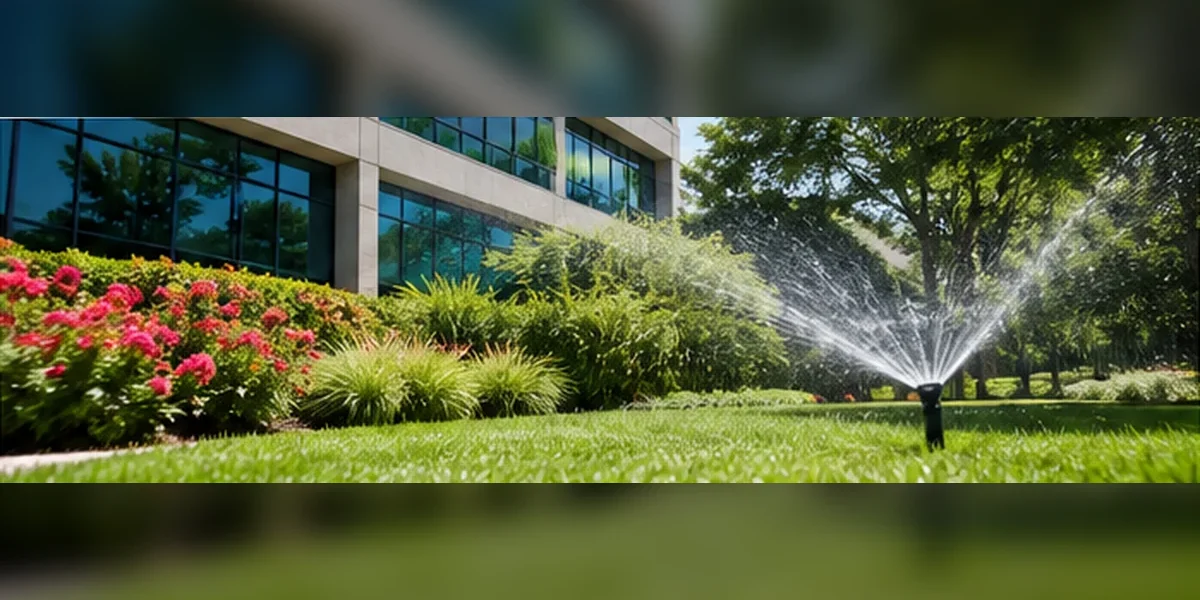
A commercial sprinkler system can waste water quietly. There may be no dramatic pipe break, no geyser in the parking lot, and no obvious alarm. Instead, one head drifts out of alignment. A valve closes slowly. A controller keeps running a summer schedule after the weather changes. By the time a property manager notices the utility bill or the brown turf, the problem has often been repeating for weeks.
For Houston commercial properties, irrigation maintenance is not separate from landscape maintenance. It is the system that supports turf, shrubs, seasonal color, young trees, and high-visibility entrances between rain events. When it is working poorly, the landscape can be overwatered and underwatered at the same time.
This guide explains eight signs that a commercial irrigation system may be wasting water, what each symptom can indicate, and when to schedule commercial sprinkler repair in Houston.
Why Commercial Irrigation Problems Are Easy to Miss
Most sprinkler systems run early in the morning, overnight, or during periods when property managers are not walking the site. That makes irrigation one of the easiest building systems to ignore until the landscape sends a visible signal. A broken head may be spraying pavement at 4:30 a.m. every Tuesday and Thursday without anyone seeing it happen.
The other challenge is that the symptom may appear far from the cause. A dry patch can come from a clogged nozzle, low pressure, poor head spacing, a closed valve, damaged pipe, or a controller issue. A soggy area may be runoff from a different zone rather than a leak directly beneath the wet spot. A systematic inspection is more useful than simply increasing run time.
1. Water Is Spraying Sidewalks, Parking Lots, or Building Walls
Overspray is one of the clearest signs that irrigation water is not reaching the landscape efficiently. Heads can rotate out of position after mowing, vehicle contact, foot traffic, soil movement, or routine wear. Wind can make the problem worse, but persistent spray onto concrete usually deserves an adjustment.
Besides wasting water, repeated overspray can leave entrances wet before employees arrive, create staining on walls, and send runoff toward drains instead of plant roots. A coverage audit should verify head position, nozzle pattern, pressure, and whether the zone is appropriate for the area it serves.
2. One Area Is Soggy While Another Stays Dry
Uneven moisture often means the system is distributing water unevenly. Common causes include mismatched nozzles, blocked spray patterns, sunken heads, pressure differences, slopes, compacted soil, and zones that combine plants with very different water needs.
The wrong response is usually to add minutes to every zone. That may rescue the dry area temporarily while making the wet area worse. A better approach is to identify the actual distribution problem and correct the hardware or schedule.
3. The Water Bill Changes Without a Clear Reason
Landscape irrigation can account for a meaningful share of outdoor water use on commercial properties. If usage rises even though the property, tenant count, and irrigation season have not changed much, the irrigation system should be part of the investigation. Leaking valves, cracked lateral lines, broken heads, and excessive run times can all increase consumption without producing a dramatic visual failure.
Property managers benefit from comparing current bills with the same period from prior years and noting major landscape changes. A sudden shift creates a reason to inspect rather than assume Houston heat alone is responsible.
4. Sprinkler Heads Are Misting Instead of Producing a Clean Pattern
Fine mist that drifts away from the target area can indicate excessive pressure or the wrong nozzle for the operating conditions. Water applied as mist is more vulnerable to wind and evaporation than a controlled spray pattern. Pressure problems can also create inconsistent coverage between the heads closest to the valve and those at the end of a zone.
A professional irrigation check can measure operating pressure and determine whether pressure regulation, nozzle changes, or zone modifications are appropriate.
5. A Zone Will Not Shut Off Completely
A valve that continues passing water after a scheduled cycle can turn a normal watering event into hours of waste. The symptom may be obvious standing water, a head that continues weeping, or an area that stays unusually green and soft. Debris in a valve, worn internal components, wiring issues, or pressure problems can all contribute.
Because a stuck valve can keep releasing water when no one is watching, it is a problem worth addressing promptly rather than waiting for the next regular landscape visit.
6. Dry Spots Reappear Even After You Increase Run Time
A recurring dry patch is often a distribution problem rather than a scheduling problem. Increasing the run time may waste water elsewhere while the dry area still receives too little. Inspect for clogged nozzles, blocked heads, low pressure, damaged pipes, poor head spacing, or plant growth that now interrupts the spray pattern.
The mowing and landscape crews can provide useful context because they see the same turf repeatedly. Coordinating irrigation with commercial lawn maintenance makes it easier to identify patterns before damaged turf needs replacement.
7. The Controller Runs the Same Schedule Through Every Season
A controller is only as efficient as the schedule programmed into it. Houston does not have the same irrigation demand in February, May, August, and November. Rainfall, temperature, plant growth, and daylight change throughout the year. A fixed schedule can easily become excessive during cooler or wetter periods and insufficient during prolonged heat.
Seasonal programming, rain shutoff functionality, and weather-responsive controls can make watering more closely match actual landscape demand. Controllers should also be checked after power interruptions, lightning events, service work, or unexpected schedule changes.
8. Irrigation Runs During or Immediately After Heavy Rain
If sprinklers are operating while the property is already saturated, the controller, rain sensor, or operating procedure deserves attention. Extra water during wet periods can create runoff, soft turf, root stress, and unnecessary expense. It can also complicate mowing because equipment should not cross saturated ground when rutting is likely.
This becomes especially important during storm season. The same irrigation shutoff and controller checks that belong in routine maintenance also belong in a commercial landscaping hurricane plan.
What an Irrigation Audit Should Check
| Inspection Point | What the Technician Looks For | Why It Matters |
| Controller and schedule | Run days, start times, seasonal settings, rain response, station programming | Prevents unnecessary cycles and mismatched watering |
| Valves and piping | Leaks, stuck valves, pressure loss, wet areas, damaged fittings | Stops hidden water loss and unreliable zones |
| Heads and nozzles | Broken, clogged, sunken, tilted, mismatched, or obstructed heads | Improves distribution and reduces overspray |
| Coverage | Dry gaps, excessive overlap, blocked patterns, slope runoff | Helps apply water where plants actually need it |
| Pressure | Misting, weak spray, inconsistent performance across a zone | Supports uniform application and equipment performance |
| Site conditions | Soil, shade, plant type, drainage, traffic, recent landscape changes | Connects the irrigation plan to the real property |
Repair the Cause Before Replacing the Landscape
A brown lawn or failing planting bed can look like a landscaping problem when the real issue is water delivery. Replacing plants before correcting coverage, pressure, or scheduling can lead to the same failure again. The sequence matters: diagnose the water problem, correct it, allow the landscape to respond, and then decide what truly needs replacement.
High Maintenance combines commercial landscaping in Houston with irrigation repair, mowing, tree and shrub care, and seasonal maintenance. Having the same team observe both the plants and the irrigation system creates a clearer feedback loop than treating them as unrelated services.
A Simple Property-Manager Irrigation Checklist
Walk the property during an active irrigation cycle at least occasionally instead of relying only on daytime visual inspections.
Compare water bills by season and investigate unexplained increases.
Look for persistent puddles, soft soil, unusually green strips, and recurring dry zones.
Confirm that controllers, rain sensors, and shutoffs are accessible and labeled.
Ask landscape crews to report damaged heads, overspray, broken lines, and turf stress when they see them.
Review irrigation after freezes, major storms, construction, vehicle damage, or landscape renovations.
Keep Water Working for the Property
Efficient irrigation is not about watering as little as possible. It is about applying the right amount of water, in the right place, at the right time. When a commercial system is inspected and adjusted instead of left on autopilot, the landscape is easier to maintain and the water bill is easier to explain.
High Maintenance Commercial Landscaping provides commercial sprinkler repair and irrigation maintenance throughout Houston, Humble, and Kingwood. Property managers who are seeing overspray, dry spots, pooling, pressure problems, or unexplained water use can request a commercial landscaping quote for a property-specific evaluation.
Frequently Asked Questions
How can I tell if my commercial sprinkler system has an underground leak?
Common signs include a zone with low pressure, persistent soggy soil, a patch that stays unusually green, water surfacing between sprinkler heads, or water use that rises without a clear scheduling change. Some leaks are difficult to locate visually, so a zone-by-zone inspection may be needed.
How often should a commercial irrigation system be inspected in Houston?
The right frequency depends on property size, system complexity, landscape visibility, and seasonal conditions. At minimum, the system should be checked before peak warm-season watering and after events such as freezes, major storms, construction, or recurring turf stress. Properties under regular landscape maintenance can also benefit from ongoing visual monitoring between formal audits.
Can adjusting the sprinkler controller reduce water waste?
Yes. A controller that runs too frequently, waters for too long, or ignores seasonal weather can waste water even when every sprinkler head is functioning. Seasonal scheduling, rain-response features, and zone-specific run times help the system better match actual plant and site conditions.
Property-management note: This article provides general landscaping information. Irrigation design, electrical controls, backflow devices, and buried piping may require qualified professionals and compliance with local requirements.