
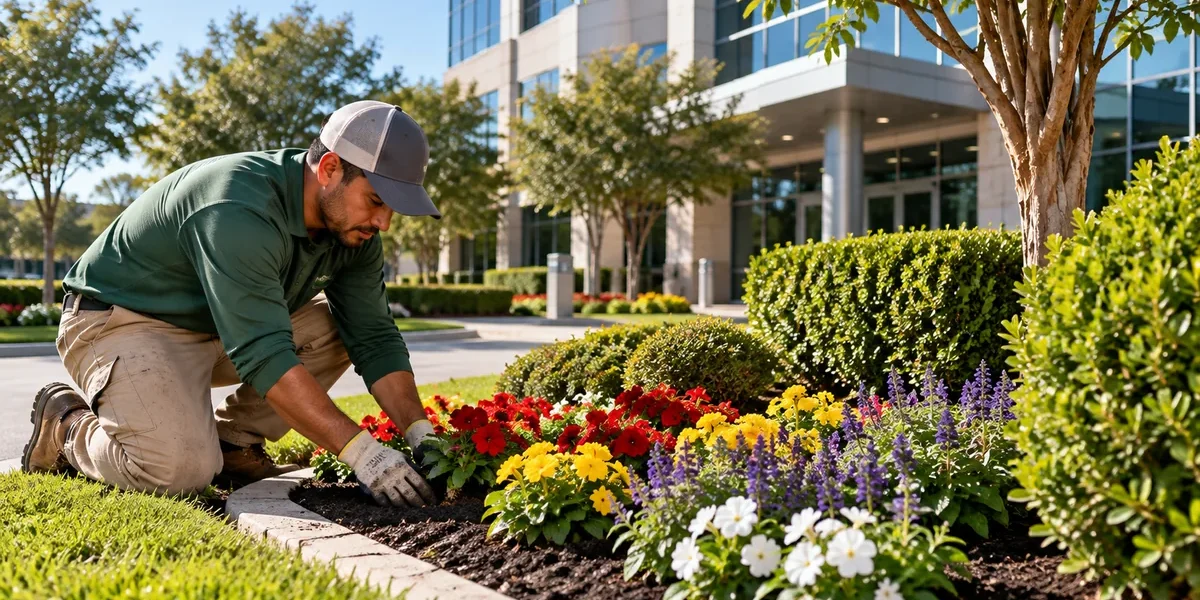
Seasonal flowers are one of the fastest ways to refresh a commercial property without redesigning the entire landscape. A carefully planned bed at an entrance, monument sign, leasing office, or high-traffic corner can make a site feel current and well managed. But in Houston, commercial seasonal color Houston programs need more than a pretty plant list. Heat, humidity, sudden rain, irrigation differences, sun exposure, and maintenance frequency all influence how long a planting stays attractive.
High Maintenance already includes flower installation, bed maintenance, and seasonal color within its commercial landscaping services in Houston, so color rotations can be coordinated with routine maintenance instead of treated as a one-time installation.
Why Seasonal Color Works So Well on Commercial Properties
Most visitors do not inspect every shrub or turf blade. They notice focal points: the sign at the street, the main entrance, the path from parking to the door, the leasing office, or the corner visible from traffic. Seasonal color concentrates visual impact in those places.
For property managers, that makes flower rotations a useful tool for improving curb appeal without changing large areas of established landscaping.
Put Color Where People Actually See It
| High-Value Location | Why It Deserves Seasonal Color |
| Monument signs | Creates a strong first impression from the road and helps the property look intentionally maintained. |
| Main entrances | Frames the arrival experience for tenants, customers, patients, guests, or residents. |
| Leasing offices | Supports apartment and commercial leasing presentation where prospects make quick judgments. |
| Retail corners | Adds visual energy to high-traffic frontage without blocking tenant signage. |
| Amenity areas | Can make courtyards, clubhouses, and gathering areas feel more finished and welcoming. |
Sun Exposure Comes Before Color Preference
The same flower can perform very differently in a bed that receives all-day sun versus one shaded by a building or mature trees. Before choosing colors, evaluate how many hours of direct sun the bed receives, whether reflected heat comes from walls or pavement, and how quickly the soil dries after irrigation.
Plant selection should follow those conditions. A brand palette only helps if the flowers can actually perform in the site where they are installed.
Plan for Houston’s Warm and Cool Growing Seasons
Houston’s long warm season creates opportunities for extended color, but one plant palette rarely performs at the same level year-round. Successful commercial programs typically rotate plant material as heat, day length, and cooler weather change.
Instead of waiting for beds to decline visibly, property managers can schedule rotations around expected seasonal transitions and major property events. That keeps entrances from spending weeks in an in-between stage.
Design Beds for Maintenance, Not Just Installation Day
A seasonal bed should still look intentional several weeks after installation. That means plant spacing, mature size, irrigation coverage, edging, mulch, and access for maintenance crews should all be considered before planting begins.
Avoid overcrowding. Plants need room to reach their expected mature size without quickly becoming tangled or disease-prone.
Keep sight lines clear. Flowers and companion plants should not hide monument signage, directory signs, windows, or pedestrian views.
Use defined bed edges. A clean edge makes even a simple planting read as intentional.
Protect soil with mulch where appropriate. Mulch can help moderate soil moisture, suppress weeds, and create a finished appearance.
Leave service access. Crews need space to deadhead, replace weak plants, inspect irrigation, and remove litter without trampling the display.
Irrigation Can Make or Break Seasonal Color
Seasonal flowers often have different water needs than established shrubs or drought-tolerant plants. If all of them share one irrigation zone, the schedule may be too wet for one group and too dry for another.
That is why seasonal beds should be checked alongside commercial irrigation performance. Broken heads, overspray, runoff, clogged emitters, or poor coverage can quickly turn a high-visibility bed into the first place a visitor notices a maintenance problem.
Color Should Support the Property, Not Fight It
For offices and corporate campuses, a restrained palette can reinforce a polished professional image. Retail properties may benefit from stronger contrast at entrances and corners. Apartment communities can use color to strengthen leasing-office presentation and amenity areas. HOAs often concentrate seasonal planting around monuments and shared entrances.
HighMTC’s office landscaping and retail landscaping pages already emphasize seasonal color at entrances, monument signs, and high-visibility corners—exactly where a focused rotation can create the most impact.
Coordinate Color With Shrubs, Turf, and Signage
Seasonal flowers look best when the rest of the scene is under control. A bright bed will not compensate for shrubs covering a sign, weeds growing through mulch, ragged edging, or turf creeping into the planting area.
Treat each focal bed as a complete composition: background shrubs provide structure, seasonal flowers provide temporary color, mulch or groundcover finishes the soil surface, and clean edges separate the bed from turf and pavement.
A Practical Rotation Process for Property Managers
Identify the priority beds. Start with entrances, signage, leasing offices, and high-visibility corners rather than spreading color thinly across the whole site.
Document site conditions. Note sun, shade, reflected heat, drainage, irrigation coverage, and recurring problem areas.
Set a visual standard. Decide whether the property needs bold color, a restrained corporate palette, or a specific brand-friendly combination.
Choose plants for the season and exposure. Match plant material to real site conditions rather than selecting only by color.
Install and inspect irrigation. Verify that new plantings receive consistent coverage without flooding adjacent hardscape.
Maintain the display. Weeding, deadheading, replacement, edging, cleanup, and irrigation adjustments keep the bed presentable between rotations.
Schedule the next rotation before decline. Plan transitions early so beds do not sit empty or visibly tired during important periods.
Seasonal Color Can Be Budgeted Strategically
A property does not need flowers everywhere to benefit from seasonal color. Concentrating installation in the most visible areas can produce a stronger visual result than distributing a smaller number of plants across many low-impact beds.
Property managers can also separate “must-look-good” beds from secondary areas. Primary entrances and monument signs may justify more frequent refreshes, while lower-visibility beds rely more on evergreen structure and mulch.
Make Seasonal Color Part of the Maintenance Calendar
The best seasonal displays are not stand-alone projects. They are part of a recurring landscape schedule that includes mowing, shrub trimming, irrigation checks, bed weed control, mulch, cleanup, and replacement of stressed plants.
A coordinated commercial landscaping maintenance plan lets seasonal color work with the rest of the property instead of competing for attention after other landscape areas have already declined.
Frequently Asked Questions
How often should commercial flower beds be changed in Houston?
There is no single schedule for every property. Rotation timing depends on plant selection, season, sun exposure, irrigation, maintenance level, and the appearance standard the property wants to maintain. Many commercial programs plan around warm-season and cool-season transitions rather than waiting for plants to fail completely.
Where should a commercial property use seasonal color first?
Start with the areas people notice first: monument signs, main entrances, leasing offices, high-traffic corners, and key amenity spaces. Concentrating color in high-visibility zones usually creates more impact than spreading small plantings across the entire property.
Can seasonal flowers share irrigation with shrubs?
They can, but the watering needs may be different. A bed should be evaluated for plant water requirements, emitter or sprinkler coverage, soil drainage, and runoff. If the zone consistently over- or under-waters one group, the irrigation strategy may need adjustment.